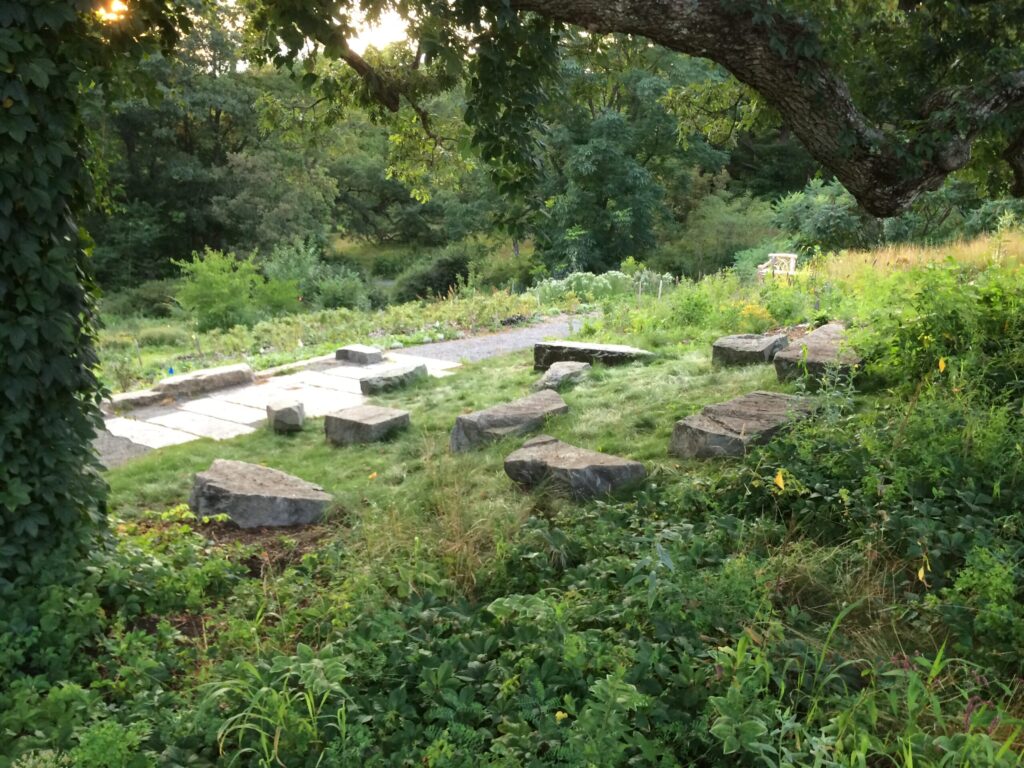
The design for this inner-city site envisions a productive urban farm and includes solutions for exposed bedrock, potential soil contamination, and steep slopes.
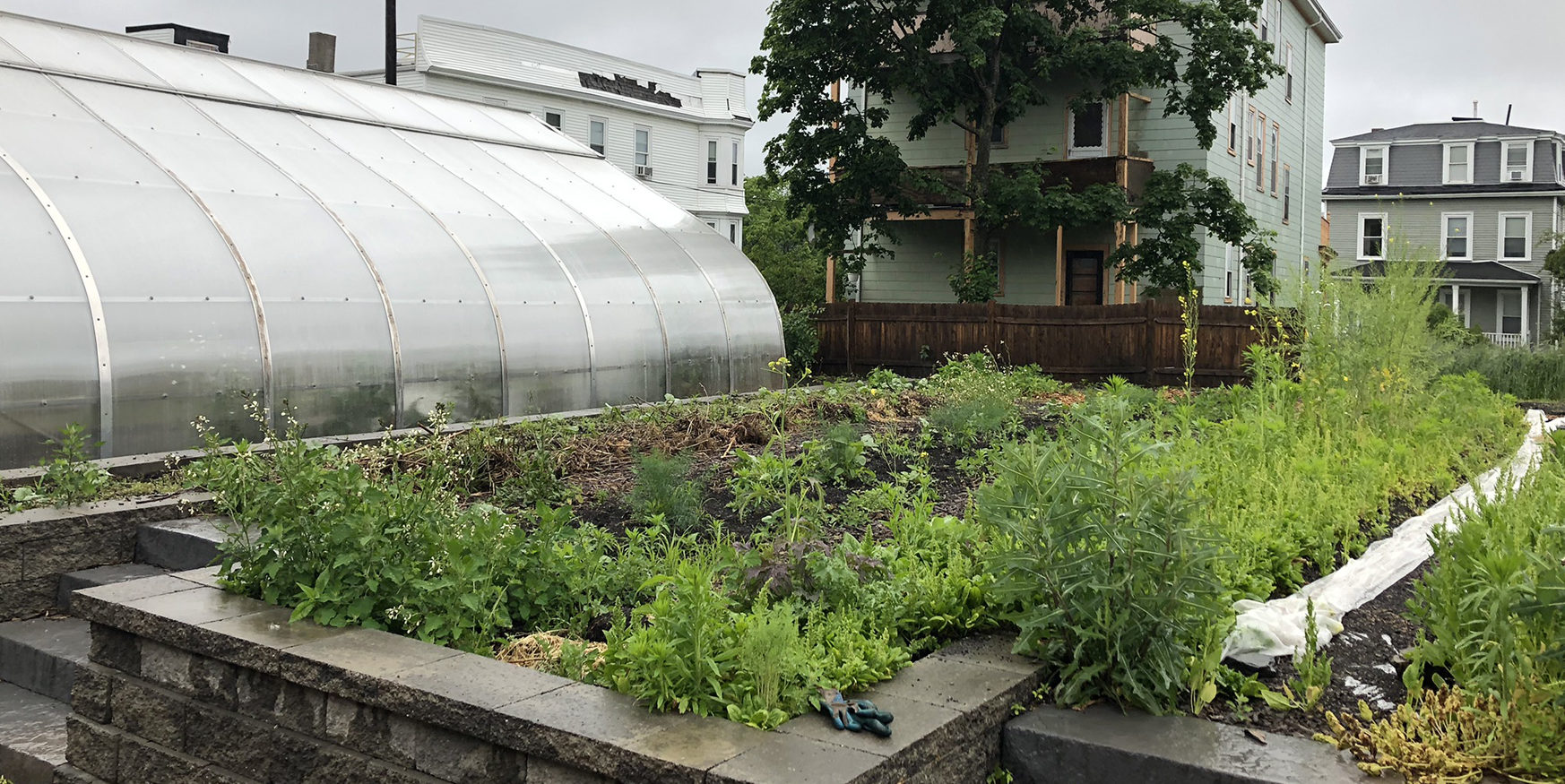
In 2015, the Trust for Public Land invited RDG to design a ground-level urban farm in Dorchester as part of their ongoing work to transform vacant lots and increase land access for urban farmers. This collaborative project also included Dudley Neighbors, Inc. and the Urban Farming Institute.
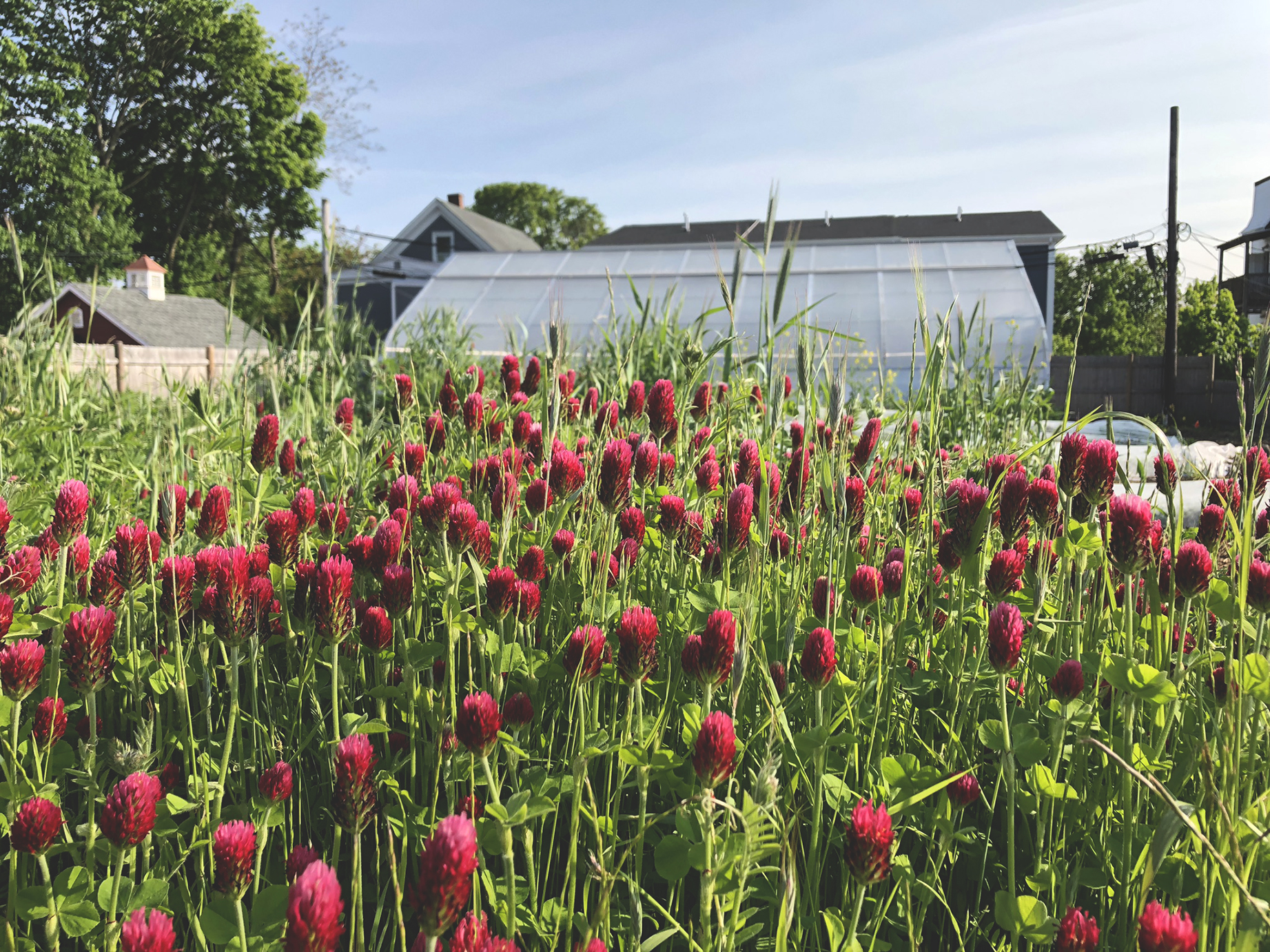
The overall goal for this project was to create a commercial farm with local distribution, education, and neighborhood involvement. The design includes a greenhouse, an annual production area, and a community gardening space on two adjacent vacant lots. The designs have been generated through a public participatory design process with a neighborhood association and community members.
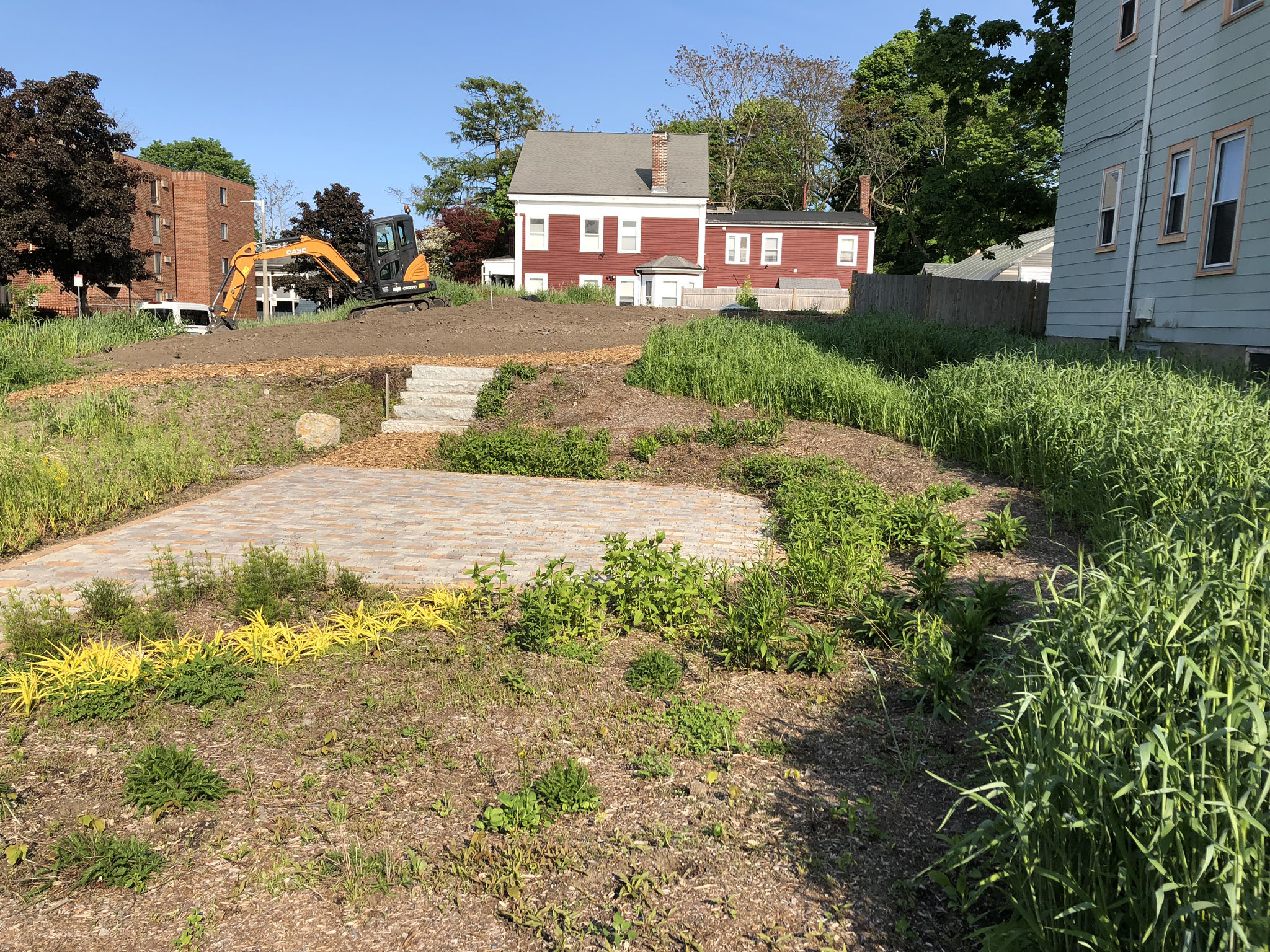
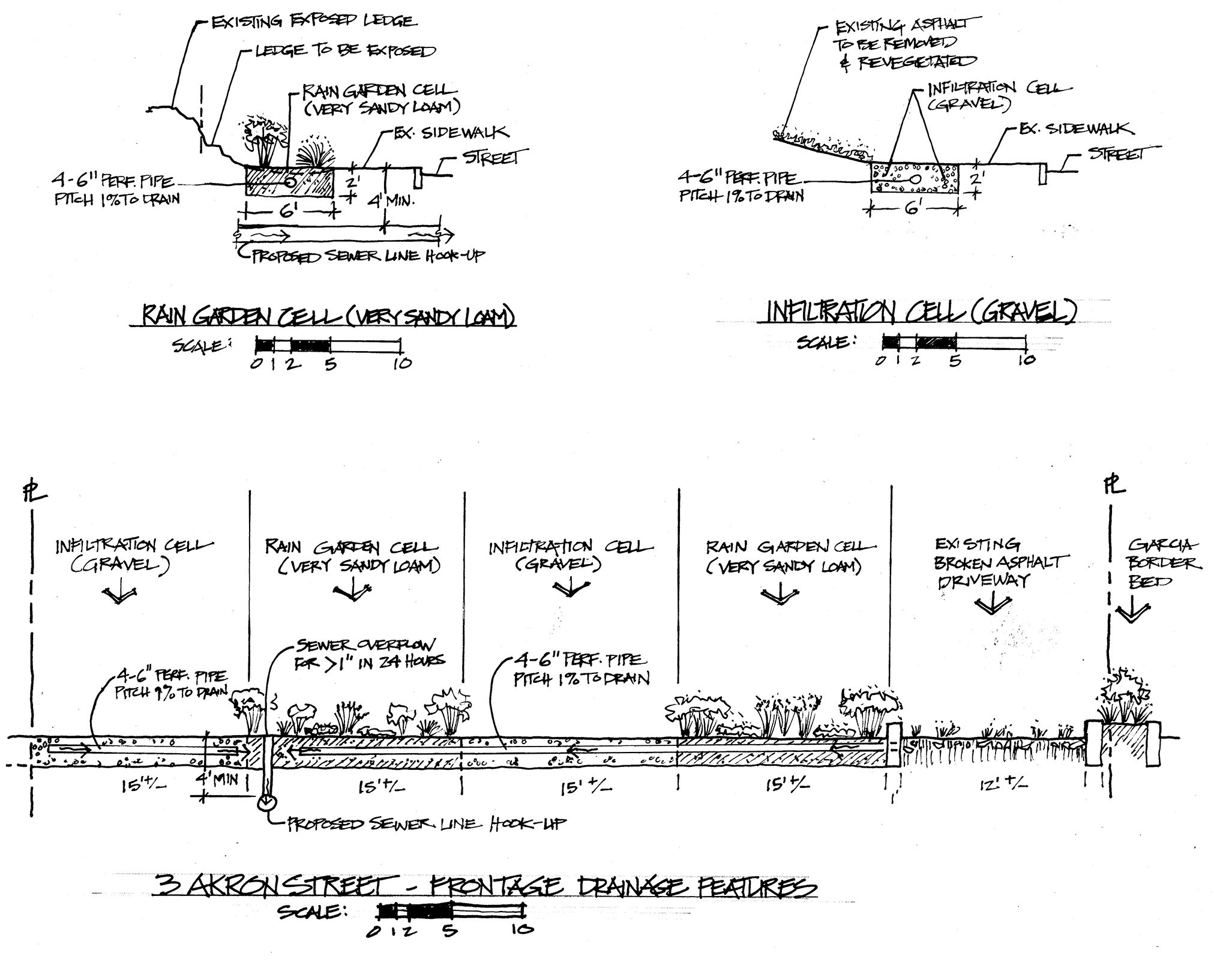
The vacant lots in Dorchester posed several challenges that required innovative solutions. Access for farm vehicles and visitor traffic was carefully considered in this high-density urban neighborhood. Extensive soil analyses were conducted to investigate soil contamination that might affect crop quality. Exposed bedrock and significant grade changes created challenges for stormwater infiltration, soil stability, and universal access. RDG’s solutions included integrating above-ground rainwater capture, utilizing living slope stabilization methods, and the careful design of paths and walkways.
After years of permitting delays, Tommy’s Rock is up and running. In 2020, the farm officially became part of the Boston Farms Community Land Trust.
Client
Tommy’s Rock Urban Farm via Trust for Public Land (national non-profit)
Dorchester, MA
Partners
- Dudley Neighbors, Inc.
- Urban Farming Institute
Key Features
- Four-season greenhouse
- Hedgerows for screening, wildlife habitat, and production
- Annual and perennial production space
- Integration of exposed bedrock into community space
- Parking for farm vehicles and visitors
- Soil barriers to contain contamination
- Regenerative soil practices in non-contaminated areas
Services
- Coordination between multiple organizations and stakeholders
- Public workshops and community meetings
- Site analysis
- Zoning and permitting
- Detailed planting plans
- Construction documents
- Construction oversight